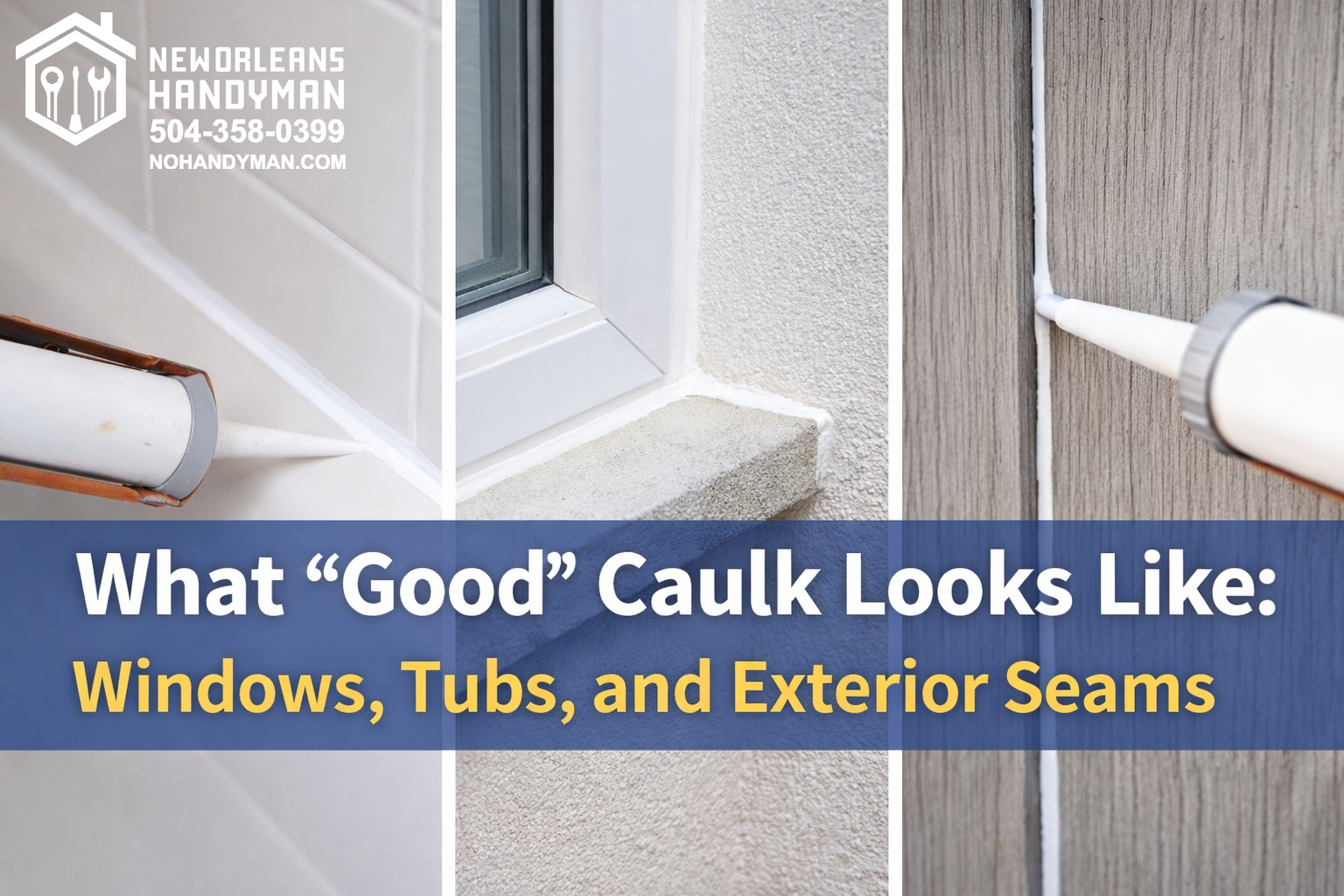
What “Good” Caulk Looks Like: Windows, Tubs, and Exterior Seams
Caulk isn’t cosmetic here—it’s protection
In a humid, rain-heavy city, caulk is a first line of defense. Bad caulk (or the wrong type) lets water creep behind trim, tile, and siding—then you’re paying for rot, mold, and drywall repairs later.
Here’s how to tell if caulk is done right.
What good caulk should look like
Good caulk:
-
Smooth, even bead (no lumps, gaps, or thin spots)
-
Clean edges (tooled, not smeared)
-
Fully bonded to both surfaces (no lifting)
-
Consistent thickness (not razor-thin)
-
No pinholes or bubbles
-
No cracks after curing
Bad caulk:
-
Bead looks “ropey” or bumpy
-
Pulling away at edges
-
Cracks, shrinkage lines, or gaps at corners
-
Caulk applied over wet/dirty surfaces
-
Multiple layers stacked on top of old failing caulk
The 3 highest-impact areas
1) Tubs & showers (mold + water intrusion)
What good looks like:
-
One continuous bead along tub-to-tile and vertical corners
-
No breaks around fixtures/soap niches
-
Fully sealed where water sits or runs
Red flags:
-
Black spots (mildew/mold), peeling edges, or gaps
-
Soft drywall outside the shower wall
-
Loose tile/grout near the tub lip
Pro tip: If there’s old failing silicone, it must be removed—new silicone won’t bond reliably to old silicone.
2) Windows & exterior trim (rot prevention)
What good looks like:
-
Sealed at trim joints and window casing seams
-
No caulk blocking weep paths (windows need to drain)
-
Paintable caulk where it’s meant to be painted
Red flags:
-
Dark staining at seams
-
Soft wood at lower corners
Pro tip: Exterior caulk is about keeping water out and letting assemblies dry—done wrong, it can trap moisture.
3) Exterior seams (siding joints, penetrations, gaps)
What good looks like:
-
Sealed around pipe penetrations, hose bibs, and gaps
-
Neat bead—no messy smears that fail early
-
Correct material for exterior UV exposure
Red flags:
-
Cracked caulk around penetrations
-
Insects entering at gaps
-
Water staining on interior walls near seams
Picking the right caulk (simple version)
-
Silicone: best for wet areas (tubs/showers), not paintable
-
Siliconized acrylic/latex: paintable, good for interior trim
-
Polyurethane / exterior-rated sealant: durable for exterior seams and movement
(Using the wrong product is a top reason caulk fails early.)
How often should you re-caulk in New Orleans?
-
Showers/tubs: typically every few years depending on ventilation and cleaning
-
Exterior trim/windows: check annually; re-seal when you see cracking/lifting
-
High-sun/wind areas: may need attention more often
Want it done clean (and correctly the first time)?
We can re-caulk tubs, showers, windows, and exterior seams—clean removal, correct product selection, and a finished bead that actually seals.
Text photos to: 1-504-358-0399 or Submit your request on Nohandyman.com